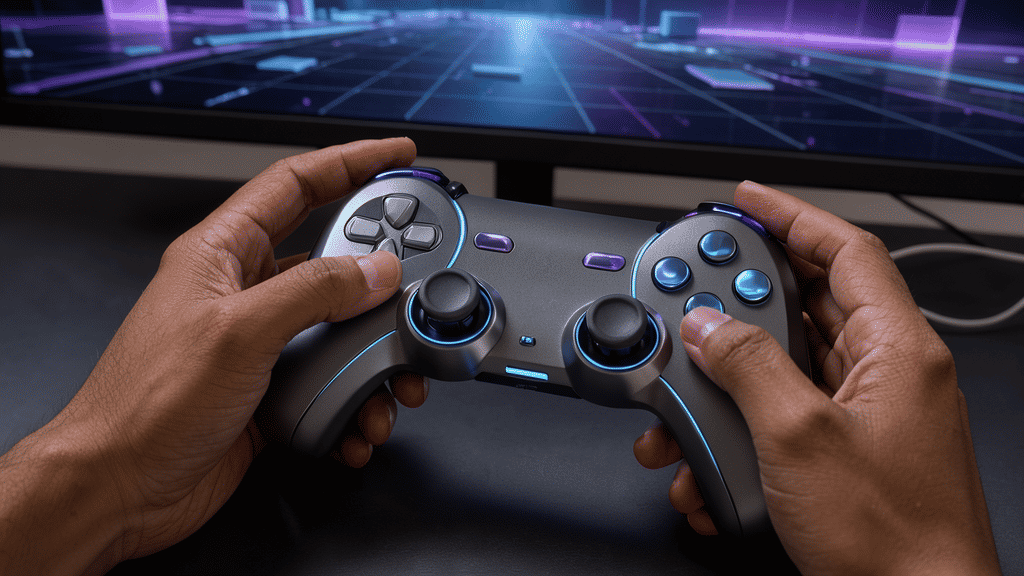
In the realm of gaming, innovation is the heartbeat that fuels progression. As gamers, we incessantly seek advancements that promise more immersive and engaging experiences. Innovative controls have become the forerunners of this evolution, transforming how we interact with our favorite games and redefining what it means to be immersed in a virtual world.
Modern control systems have evolved far beyond traditional button-mashing paradigms, introducing technologies that are both intuitive and revolutionary. Motion-sensing has been at the forefront, thanks to devices like the Nintendo Wii and PlayStation Move, which allow players to physically engage with the game environment. These systems interpret a player's movements in real space as inputs, thereby blurring the lines between the real and virtual worlds. This technology offers undeniable advantages, fostering physical activity through gaming and delivering an experience that feels instinctively natural.
Further advancing immersion, virtual reality headsets seamlessly integrate head-tracking and motion controls to deliver a truly captivating experience. By transporting players directly into the gaming universe, these headsets offer an unprecedented level of interaction. Players can look around and control their in-game avatars with a combination of head movements and hand-tracked controllers, creating a sense of presence that is unrivaled by traditional gaming setups.
Beyond motion sensing and virtual reality, haptic feedback technology is making strides in control innovation. This tactile feedback causes controllers or accessories to vibrate or apply resistance, simulating the feeling of physical forces like gravity, friction, or impact. With devices such as haptic gloves, gamers can gain a sense of touch within the digital realm, further bridging the gap between the player and the virtual environment. These subtle tactile cues deepen immersion by replicating real-world sensations, enhancing both the emotional and physical connection to the gameplay.
Innovative control systems also accommodate diverse accessibility needs, allowing more players to enjoy games in new ways. Companies are increasingly focusing on adaptive controllers, which can be customized to meet the unique needs of gamers with physical disabilities. By integrating features like switchable buttons, joystick variations, and voice commands, these controllers open avenues for an inclusive gaming world where everyone can revel in the excitement.
Voice recognition has also emerged as a game-changer, enabling players to execute commands through speech. This provides a hands-free approach to gaming, which is particularly advantageous in scenarios where rapid multitasking or communication is required. With increasingly sophisticated voice AI, the ability for systems to accurately interpret and respond to vocal inputs continues to enhance the gaming encounter.
The possibilities offered by innovative controls are virtually limitless, with the future promising even greater advancements. As technology continues to evolve, we may see developments like neural interface systems that respond to thought patterns, allowing for mind-controlled gameplay where imagination flows freely into digital actions.
As these groundbreaking control systems continue to develop, they hold the power to redefine the entire gaming landscape. By making gameplay more dynamic, intuitive, and inclusive, they offer exciting new dimensions for player creativity and connection. Whether it's through motions, touch, or voice, these systems unlock experiences that are more engaging than ever, transforming how we play and fundamentally altering our interaction with digital worlds. Welcome to a new era of immersion—one where the line between playing a game and being part of it is becoming increasingly indistinguishable.